Legacies

snowhenge

Recently, I walked Boston’s neighborhoods: brick and wrought iron, stoops and mansard roofs. In a park, I came across twelve snow figures, each about eight feet tall. They communed, faceless, in a circle. Nearby was a Methodist church; perhaps the figures were meant to be disciples or choir singers. Or they weren’t meant to be figures at all but an icy Snowhenge. A man walking a poodle stopped to stare. Four young people ran into the circle and mugged for each other’s phone cameras.

For the previous two days, snow had fallen steadily outside the windows of the center where I was attending a writing conference. I had been anxious for the snow to stop, so I could get out and walk this city where I had lived twenty years ago as a graduate student. I spent several years writing a novel for my M.F.A. thesis, and between bouts of wrestling with it, I walked and walked Boston’s streets – Back Bay, Beacon Hill, the Fens. I ate slices of pizza in the North End, admired the Fenway Victory Gardens, dreamed about owning a townhouse with a stoop.

So when the snow finally stopped falling outside the windows of the conference center, I took a long walk through the South End. The snow figures were in a park named after Titus Sparrow, who, I learned later, was the first African American umpire of the United States Tennis Association. A long-time neighborhood resident, he helped found a club where local children could play tennis. Sparrow had walked these streets, too, and for much longer than I did. He had wrestled with harsher challenges: racism and the evils of Urban Renewal, which almost destroyed his neighborhood. But he made a difference. His legacy is the park with a playground and benches and, of course, a tennis court. A park where an anonymous someone – or someones — rolled twelve fat snowballs into a circle and topped each of them with three more.

Six weeks after I returned to Seattle, pressure cooker bombs exploded shrapnel into the legs of runners and spectators at the Boston Marathon. I watched the televised clips of fire flaring, smoke and flags billowing, runners falling, fluorescent-jacketed officials racing in. The curious effect of proximity made this bombing more horrifying than the more numerous ones in plazas around the world where I have never been. I almost felt the shockwave of the blast.

And then the suspects were identified. They, too, it turned out, had spent years walking the streets of Boston. Their footsteps crisscrossed my graduate student footsteps, as my footsteps had crisscrossed Sparrow’s. And so do our dreams intertwine and our legacies unfold over the same terrain. The mystery is how contested is that terrain. One man spreads the joy of tennis, while two brothers spread the shrapnel of their pain. Their legacies are as permanent as human legacies ever are: a fence plaque, a park, a thousand scars.

The snow figures were never meant to be permanent. Which is why they fascinated me so much. All that effort — twelve towers of snow — for a few days of display. I thought wistfully of my own Sisyphean efforts to write my first novel years ago, and how only a few people ever read it. (My second novel, Half-Moon Scar, did find a publisher and a readership.) When I returned home, I tried to read my M.F.A. novel again, but it just isn’t very good. It’s time for the manuscript to follow the snow into spring’s oblivion.

For those scarred by bombs, there is no such option. Someone had the power to hurt them and hurt them deeply, and their flesh will be ever wounded by that legacy.
Posted in Uncategorized | Tagged , | 4 Comments

Video of Reading: “The Urge for Going”

My thanks to Jourdan Keith for inviting me to read as part of the Word’s Worth program, which is sponsored by Seattle City Council Member Nick Licata. My reading on April 10, 2013, is the first three minutes of this video.

Posted in Uncategorized | Tagged , | Leave a comment

New Publication: “Under the Skin” in The Common

The Common, a literary journal based at Amherst College, has published my essay “Under the Skin,” which tells the story of a week Arline and I spent in Panama trying to move her mother into a better nursing home. My thanks to Sonya Chung for her insightful editing.

Posted in Uncategorized | Leave a comment

Dignity

Image

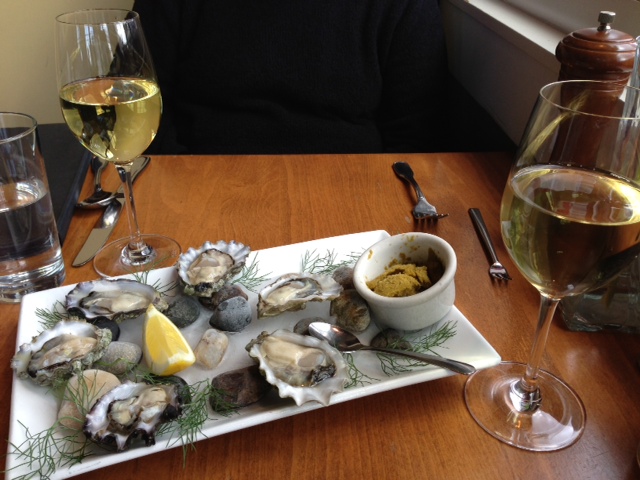
Fourteen years ago, a woman named Arline asked me on a date. She took me to lunch in downtown Seattle, where we ate oysters and watched ferries glide away from the dock. I couldn’t have imagined then what it would mean to share my life with an immigrant. It turns out that it means many things, but perhaps of most consequence is that I am constantly learning about life through the eyes of someone whose first twenty-five years were radically different from mine.

Arline left Panama with her husband and three young children in 1979. Her half-sister was a U.S. citizen because she was born in Panama’s Canal Zone to an officer in the U.S. armed forces. This sister moved to the Pacific Northwest and petitioned for Arline and her family to join her. Some years later, they became citizens. Fast forward twenty years: Arline and her husband have divorced, and she’s asking me for a date.

In many ways, our life together has been charmed: grandchildren, travel, a house and dog. But if circumstances had been different, our life would have been unimaginably difficult.

I think, for example, of our friend Susan, born in the States, who met Vivi while living in Argentina. They fell in love, Vivi got a temporary visa, and they came to Seattle. But the law didn’t respect their relationship; they couldn’t marry so Vivi couldn’t stay. Finally, Canada accepted them, undoubtedly in part because Vivi brought her professional skills as an architect, and now they live on an organic farm near Victoria. They are grateful for their new home, but it wasn’t easy leaving the old one.

I think, too, of what happened when Arline’s mother was dying in Panama. Because Arline could travel back and forth, she was able to move her mother from a substandard nursing home into a well-managed one. She spent a week with her, just two months before her death, as she recuperated from a hospital stay. I can’t imagine how it would have felt for Arline to be stranded on this side of the border; for her mother, it would have meant the difference between dying in a neglectful home, where her case of scabies was going untreated, and spending her last months in the comfort of professional care.

So much could have been different. Arline’s children might have been Dreamers; instead, they have had the opportunity to live their dreams — all three have attended college. Without documentation, Arline would have struggled to earn an advanced degree, let alone establish a career as a Spanish teacher. She probably would have worked for low wages, and she might have felt obligated to stay with her husband in order to have enough resources for her family. We may never have met.

Are these not simple desires? To live your life with the one you love? To attend your mother in her last days? To do meaningful, self-supporting work? Immigration reform is about simple desires.

Because our state has legalized same-sex marriage, Arline and I are now planning a wedding. I am delighted at the sea change in attitudes toward our relationship. I feel as if, step by step, I am emerging from a dim cave into bright light. Because of this, I can empathize with undocumented immigrants still living in the shadows. Our journey to legitimacy is not the same, but because I have now learned to see the world through different eyes, I recognize our fundamental commonality. All we want is to live our lives with dignity and purpose. All we want is that much respect.

(This essay was also posted on Momsrising.org.)

Posted in Uncategorized | Tagged , | Leave a comment

The Next Big Thing

ImageAt the opening of the Brautigan Library, Clark County Historical Museum, October 2010.

Tag – you’re it!

I don’t know who started the game, but many authors are now playing it. A writer posts answers to questions about her next project on her blog, and then she tags other writers to do the same. The game is called the “Next Big Thing.” Donna Miscolta tagged me, so here are my answers.

What is the working title of your book?

Trout Frying in America

Where did the idea for the book come from?

I read a New York Times article about good books to take on literary pilgrimages and was surprised to see it included Richard Brautigan’s Trout Fishing in America, a cult classic from the 1960s. I was obsessed with Brautigan in my adolescence, but over the years I’d gotten rid of all of my copies of his books except one: Trout Fishing in America. The article made me want to re-read the book, and eventually my partner, Arline, and I took that literary pilgrimage.

What genre does your book fall under?

Creative nonfiction/memoir. The book is not a conventional memoir; it consists of a series of short essays – flash nonfiction – that explore my readings of Brautigan, experiences as a late baby boomer, and Idaho ancestry. The thread that binds them together is the trip we took to Idaho. Brautigan’s novel is dated in some ways, but what makes it feel contemporary is the form. He, too, was experimenting with short pieces that often read like micro-essays. I enjoyed writing in conversation with his work.

Which actors would you choose to play your characters in a movie version?

Arline requests that the Hanna Schygulla of “Sheer Madness” play her. I’m thinking Tilda Swinton would make a much better me than me. I can dream, can’t I?

No idea who would play Brautigan.

What is the one-sentence synopsis of your book?

Trout Frying in America is a conversation with Richard Brautigan’s iconic 1967 novel, Trout Fishing in America; at thirteen I obsessed over his book, and at forty-five I retraced his Idaho journey in order to understand my obsession.

How long did it take you to write the first draft of your manuscript?

For about two months, I got up early each morning, read a chapter of Trout Fishing in America, and wrote a response. That is, I used each chapter as a writing prompt. This resulted, not in a first draft per se, but a rough collection of interesting (or not-so-interesting) pieces that I then began to shape into something more coherent.

What other books in your genre would you compare this to?

Two compelling memoirs written in short essays are Abigail Thomas’s Safekeeping: Some True Stories from a Life and The Chronology of Water by Lidia Yuknavitch.

What else about your book might pique the reader’s interest?

The project inspired a couple of separate, longer essays. Thinking about my experiences as a late baby boomer led to an essay about growing up during the fight for the Equal Rights Amendment. Calyx published “Ratification” in summer 2012.

The Brautigan literary pilgrimage – along with a Virginia Woolf pilgrimage – has a cameo role in an essay about my father, “Death of a Death Scholar,” that was published in Bellingham Review in fall 2012.

Smitten with the short essay form, I’ve been posting experiments on my blog as well.

Who have you tagged?

Christine Johnson-Duell and Elaine Elinson: You’re it!

Posted in Uncategorized | Tagged , | 1 Comment

At Fifty

Chela Jodene 1988_0001
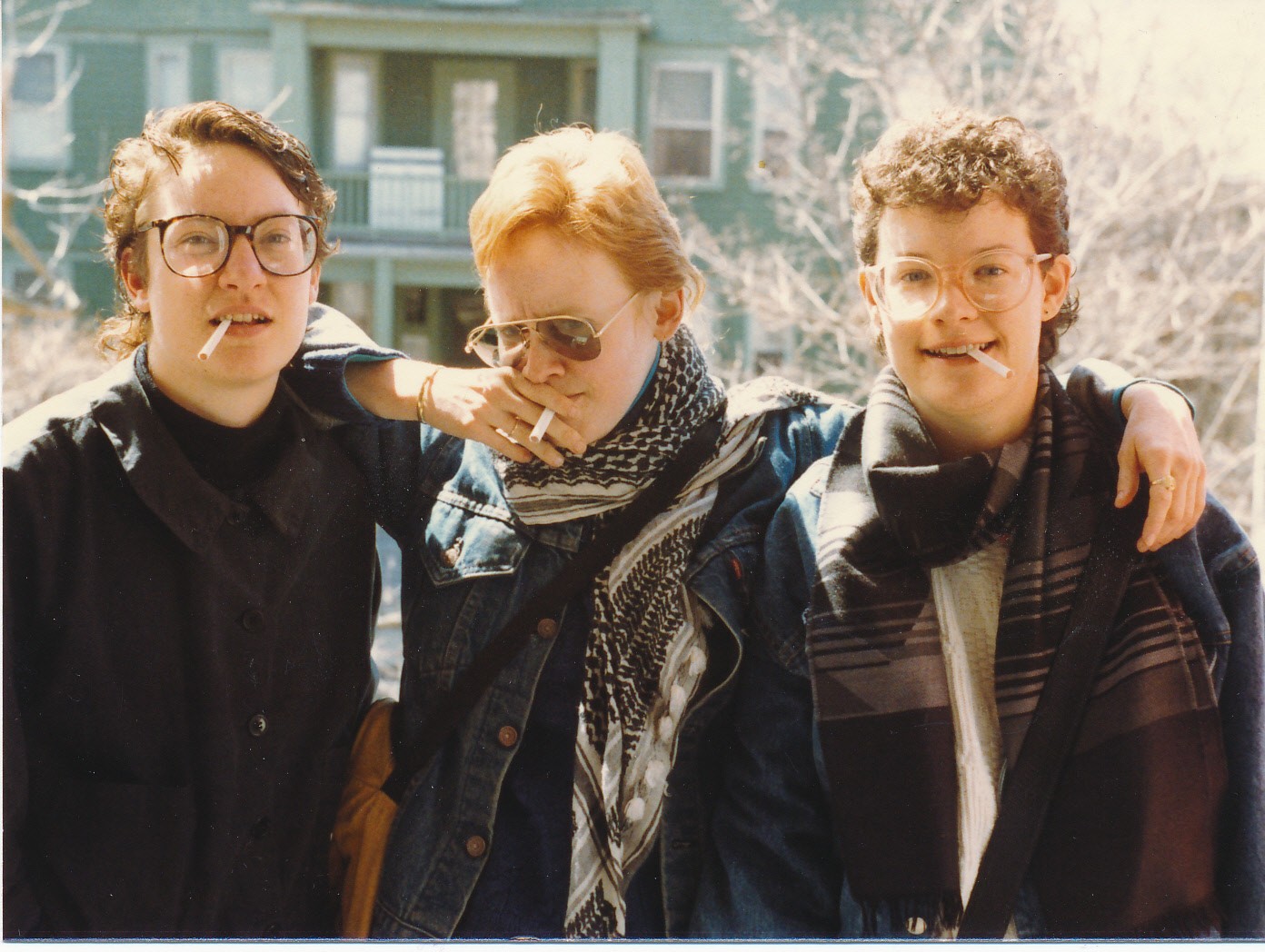
Twenty-five years ago. Exactly.

We have entered the last half of our lives. Our friends are old enough to die of old diseases. We grew up with little knowledge of death. Our mother died young. Our first lover died of epilepsy. The only ones we knew who died were relatives in dark, curtain-drawn places with pretty teacups we weren’t allowed to touch and plates of cookies we weren’t allowed to plunder. There was a boy in high school who died drag-racing, but we had to look him up in the yearbook to see who he was.

We spent our youth trying things on. We were singers in the high school musical, poets in cafes, street musicians on the Ave. We were girlfriends, best friends, spurned friends, untrusted, and trustworthy friends. We feathered, shagged, and wedged our hair. We drew green eyeshadow above our eyebrows, wore bubble-gum flavored lip gloss, refused to wear lipstick, wore too much lipstick. We wore togas to Latin club, memorized lines, mostly won at chess. We marched against the draft. We had sex, didn’t have sex, had everything but sex. We went to our first concert; it was at the Kingdome with 16,000 people. We went to an all-ages disco. After dancing with a girl, we were asked to sit down. This isn’t that kind of place, they said.

We went off to college in places like Olympia, Eugene, Berkeley, Northampton. We fact-checked for the Atlantic, took dictation, talked phone sex in a Manhattan basement, drove a taxi, kept on playing our music, writing our poems, taking our photographs. We marched for women’s rights and gay rights. We marched against the invasion of Grenada. We smoked pot, dropped acid, took mushrooms, went sober. We drank wine out of dixie cups.

Our cats traveled the country with us. We sailed halfway around the world with a family friend. We packed our bags for graduate school on the other coast. We drove from Boston to Seattle, sleeping in dark, empty campgrounds in the open air. We stopped at the Corn Palace. We sent postcards. We sent long, juicy letters. We called, out of the blue, on our birthdays and got drunk over the phone.

We fell in love. We had boyfriends who wrote us songs and built giant puppets, girlfriends who took our portraits. We made domestic nests of candles and ferns. We slept with other people and confessed. We slept with other people and didn’t confess. We lusted only in our hearts. We stayed loyal for years and years and years until someone new cracked our hearts open and we realized we’d been unhappy. We spent years alone and decided we liked it. We fell hard, very hard, and then he said he wasn’t ready for marriage, but within a year he was married to someone else. We went to couples counseling. It helped a lot. We broke up anyway. We went to individual counseling. It helped a lot. With the next lover, we knew what we wanted.

We had abortions, we had babies, we stopped having sex with men and didn’t worry about babies. Some of us had weddings. Some would wait years for weddings. Some couldn’t give a shit about weddings. We tried to adopt but it didn’t work out. We inseminated for a year, but it didn’t take. We got pregnant before we were ready but what the hell; we had a beautiful, beautiful baby. We fell in love with our nieces and nephews and friends’ children. They rode on our backs and climbed in our laps and fell asleep in our arms. Our ability to embrace these new responsibilities surprised the hell out of us.

We went to medical school. We earned master’s degrees in fine arts, library science, literature. We didn’t go to graduate school because we kept getting promoted. We learned to bind books. We made millions at a new company on the eastside that did something with computers. We were awarded a prize for our first published short story. We gave readings, we gave talks, we interviewed for new jobs. We taught, edited, wrote, photographed, supervised, healed, catalogued. We discovered we had a talent for teaching yoga.

We came home. We never left home. We couldn’t stay away from the Cascades and the Olympics, glittery on the horizon. We missed water. We missed, specifically, Puget Sound. We missed inlets and rocky beaches and blue herons. We missed ferries and the keening gulls that follow them. We missed coffee culture. We came home, but we put the entire city between us and our parents. We came home, but we put three hours between us and our parents. We moved back into our parents’ neighborhood, having forgiven them and having been forgiven.

We have entered the last half of our lives. We get small parts in plays at Seattle Rep. We publish essays in obscure journals. We play with Instagram. We teach, edit, write, photograph, supervise, heal, catalog. We drink wine from fancy glasses. We never even think about drinking anymore. We have weaned ourselves of trans fats, salt, and gluten. We love cupcakes and truffle fries. Our children are going to college now. Our favorite dogs, long gone, run in photographs on our desks. Our parents are more frail. Our parents just walked the Camino in Spain. Our parents are gone. We want, most of all, time alone to work and think and breathe. We want, most of all, to laugh with friends in candlelight and communion. We want, most of all, to make sure our loved ones know we love them, to know our loved ones love us. We want, most of all, to be. At least a few more years.

(With a nod to Julie Otsuka)

Posted in Uncategorized | 6 Comments

Of Prayers and Shells and Wooden Angels

Image

On the day Adam Lanza aimed his rifle at children in a Connecticut school, Arline and I visited an old friend of hers in a nursing home in Hialeah, a suburb of Miami. Arline was a child when her sister, older by nine years, had a group of friends that included a young man named Manuel and his future wife, Ceci. Arline remembered Ceci as a beautiful and kind young woman who didn’t mind a little kid tagging along. Now Manuel was very ill, and we went to visit him and Ceci. Arline hadn’t seen them in fifty years.

When we walked into the small room where Manuel lay, sleeping and unresponsive, Ceci stood to embrace Arline. She cradled Arline’s cheeks in her hands and remarked that Arline looked like a García; Arline’s father and Ceci’s mother were first cousins. Ceci must have been looking for the familiar in a woman she hadn’t seen for so long. Before we left, Ceci told us that she had a gift, and she took a mesh bag from her purse. In it were plastic containers for saving small things – shells, maybe, or earrings — and an index card with a quotation from the Biblical chronicle of Jabez.

Ceci, we learned, is Baptist, and as I practiced my Spanish translation skills on the quotation – “Oh, if You will bless me, please enlarge my territory, give me Your hand, and keep me from the terrible things that cause me pain!” – I thought about how important those words must be to her as she watches her husband succumb quickly to Parkinson’s and Alzheimer’s. She was not, she reassured us, a fanatic, and the gift was merely symbolic, but it was the best thing she could give us.

It was the best thing. It was best because it was meaningful to her, and she didn’t need to qualify her religious beliefs, although I appreciated that she didn’t want us to think she was proselytizing. In these times of increasingly diverse religious and nonreligious views, it can be awkward to communicate across the differences.

A number of recent events, as public as Newtown, as private as the death of a young colleague, have reminded me of the ways people with different beliefs respond to crisis and loss. Samuel G. Freedman, writing in The New York Times, asked why the nonreligious were seemingly absent after the Newtown shootings. The president spoke at an interfaith service, and the families held religious funerals. Where was the humanist community? But I think this is the wrong question. It presupposes a distinct “religious community” and a distinct “humanist” one. It assumes a chasm between so-called believers and nonbelievers.

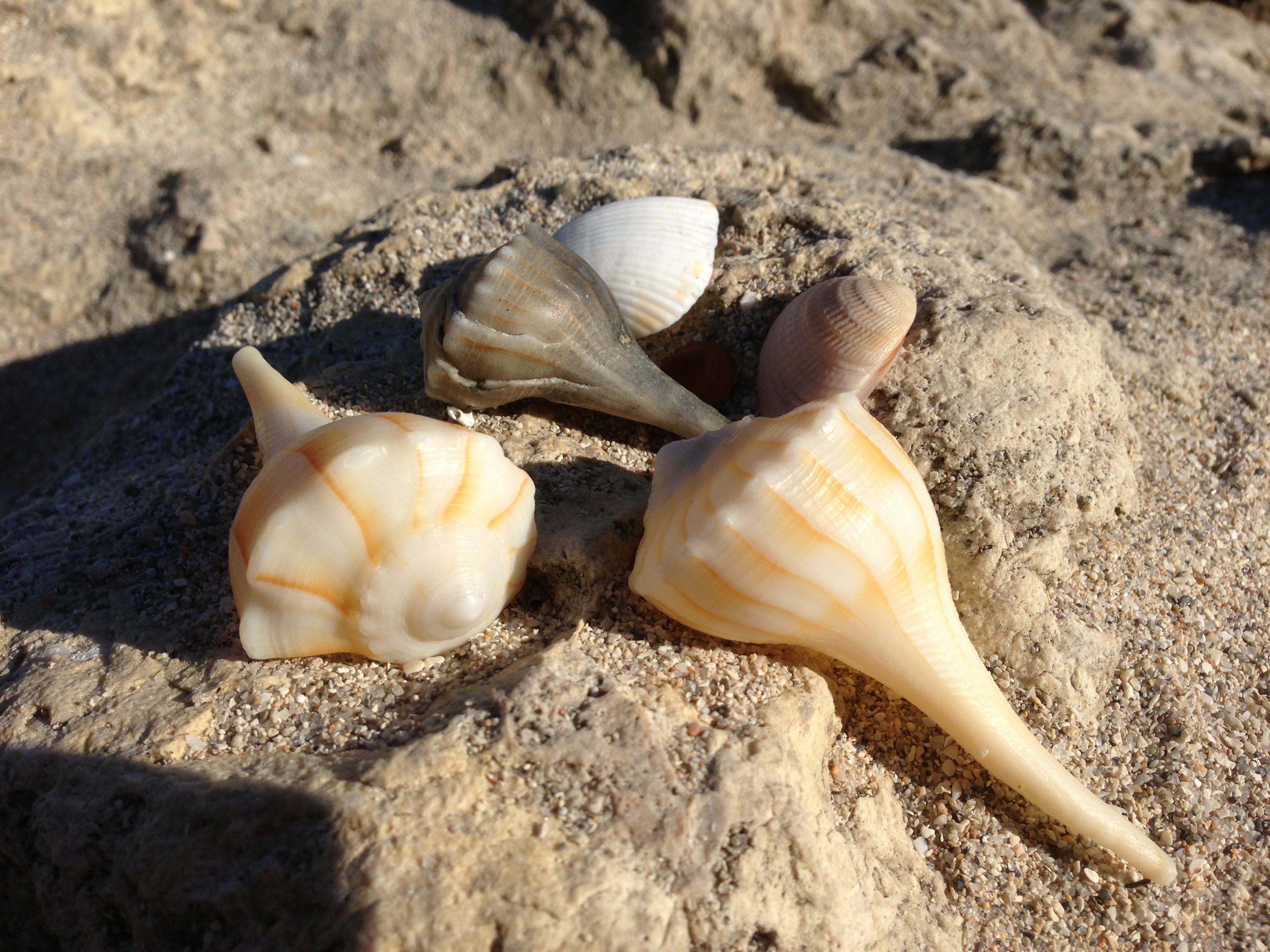
The truth is that the same people filing into those religious buildings were also most likely partaking in other kinds of rituals elsewhere, like paging through photo albums and playing videos of the deceased. Those wooden angels on a hill near Newtown aren’t part of traditional religion; they are folk religion. And all of us, all the time, are engaging in folk religion, even if we don’t call it that. On the beach in Florida, Arline and I gathered a few shells, and they sit now in a small dish on our dining room table, reminding us of the deep meditation that is sea and sand.

The purported divisions between believers and nonbelievers belie the fact that all of us are constantly engaged in expressions of meaning-making, and these expressions converge and diverge in unexpected ways. Ceci gave us Tupperware and an index card with a prayer, and we took it in the spirit offered, buoyed by her cheerful optimism despite her husband’s condition. We hope she felt comforted by what we could give her: conversation and time to sit for awhile.

We messy humans will continue to make our disorganized expressions of community and connection, sometimes within traditional paths and sometimes without. We will do it through prayers; we will do it with hillsides of wooden angels. We will do it in the shiny-floored rooms of Hialeah nursing homes, where hands touch across fifty years of absence and we recognize our common ancestry in each other’s cheekbones.

Posted in Uncategorized | Tagged , | 4 Comments

Beautyberry

Beautyberry2

This time of year, the leafless limbs of Callicarpa bodinieri bobble with amethyst berries. The bright clusters are striking in December, when most of the autumn leaves have melted into brown slicks of mush. Any garden flowers that remain — desiccated hydrangea heads, the odd fuchsia bell — have been leached of color. Amid the defeated browns and greens of winter, the berry clusters of Callicarpa, common name “beautyberry,” are stunningly cheerful.

Beautyberry is native to the southern United States but not the northern. Someone planted the shrub that is right now brandishing its showy fruits in Cowen Park, across the street from our apartment. About twenty years ago, I planted the same species in the backyard of a house I would sell a few years later when a relationship ended and a new one began. For some reason, I never planted another beautyberry, even though I had plenty of space at the new house for another one.

That beautyberry grew in the yard of the first house I owned, a little Craftsman bungalow in West Seattle. I had planted tomatoes in pea patches, marigolds in the dirt of a group house, and a full vegetable garden behind a Beverly, Massachusetts, house whose attic my girlfriend and I rented. But the garden in West Seattle, neat rectangles of grass in front and back, was the first to belong to me.

A year before we bought the house, my grandmother, a master gardener, had died and left behind shelves of gardening books. I poached a bunch of them and pored over the photographs and descriptions, identifying plants for my new garden: ceanothus, for its otherworldly blue flowers, native vine maples to screen the neighbors, mock orange for its scent. My girlfriend wanted Russian sage. I paired it with coneflowers.

In the backyard, I made a curved flowerbed border by laying a hose on the grass. I dug a shovel into the sod along the hose and pulled it up. Because plants were not cheap, I divided a few lamb’s ears over several seasons until they flopped all along that hose-drawn line. They bored me after awhile, but they grew quickly and crowded out weeds.

The beautyberry shrub was small and produced only a few clusters of berries every winter, but they were dramatic. It was as if all the spring and summer purples — of the lilacs and iris, of the petunias and asters — had been captured and distilled in those berries. I would walk across the crunchy, frosted grass to the back fence and admire them. And then I moved, suddenly, after falling in love faster than it should be possible, and I never saw those berries again.

At the new house, I didn’t plant a beautyberry. The new yard needed, instead, hydrangeas and sword ferns, fuchsias and spirea. After thirteen years, Arline and I sold that house and moved into the co-op apartment where we live now. It has a common garden. At some point I will take my turn weeding.

The beautyberry in the park reminded me of all my hands have tended over these years. I have put down roots and yanked them out, figuratively and literally, so many times that I often find myself nostalgic for a lost patch of ground.

Posted in Uncategorized | Tagged , | 4 Comments

New Publication: “Death of a Death Scholar” in Bellingham Review

Bellingham Review has published my essay, “Death of a Death Scholar,” in its fall 2012 issue. When my father’s book, Beyond the Good Death, was published, I couldn’t help thinking about how I would apply his anthropological insights into death and dying to my own experiences with death, most notably his inevitable future one. I wrote the first draft in a fever. Many revisions later — and after soliciting his reaction — I am happy with the result.

Posted in Uncategorized | Tagged , | Leave a comment

You’re Going to Make It After All


Sandy and the Mary Tyler Moore table plaque

Over twenty years ago my best friend in graduate school, Sandy Yannone, handed me a jadite Fire King mug filled with coffee and made me a waffle. Her fat tabby cat, Wally, aka Chew, sauntered between the legs of the vinyl stool I was sitting on. I don’t remember what prompted my angst that morning, but I know Sandy cheered me up. She drew, on a piece of paper I still have somewhere, the talent-discipline matrix, which showed that if I persevered in my writing, I could overcome any lack of innate talent.

Sandy was, in my opinion, the best writer in our M.F.A. class, a poet whose lines were both shimmering and tough. I didn’t envy her work because I loved her so much, this generous woman with an easy laugh, so prone to contagious obsession: kitschy 1950s dishware, Houdini, the Titanic. I seem to remember her writing about oranges a lot one year.

But I worried about my own abilities. Did I really have the discipline to keep writing? Could I write something worth reading? Worth publishing? Or was my attempt to write simply an opportunity to scorch my wings and fall back to earth?

While Sandy and I talked endlessly those years about writing and our professors and our possible writing futures, we also had a lot of fun. We poked through flea markets and antique stores, visited tacky Christmas light displays, and made a pilgrimage to Polly’s Pancake Parlor in the White Mountains of New Hampshire. Much of the fun I had in graduate school was in her company.

Last weekend Sandy came to my college to attend a conference, and we ate dinner in the suburban elegance of the Des Moines Anthony’s. Over panfried oysters and salmon cakes, we talked about how we feel about our writing careers now as we stroll toward our fiftieth birthdays and watch the odds of becoming the next Adrienne Rich or Margaret Atwood diminishing to zero.

We’re proud of the work we’ve written and published, and we have dreams of writing and publishing yet more. But we have discovered that what Anne Lamott said in Bird by Bird is true; it’s the satisfaction of the work itself, the everyday word-by-word, bird-by-bird — sometimes pleasurable, sometimes hard — that matters. And other parts of our lives matter, too, at least as much as our writing careers, if not more: the students who love to come into Sandy’s college Writing Center because she’s furnished it with formica tables like their grandmothers used to have; the work I do helping faculty be more culturally responsive; our partners, our friends, our parents and siblings and pets.

Cheryl Strayed, suddenly famous for her amazing book Wild, recently commented on the idea that she came out of “nowhere”: “There is a strong and vibrant literary culture that exists and thrives in this nation,” she wrote, “and it does not exist in a place called nowhere, whether you know about it or not. It’s the place where the writers work.” Sandy and I live and work in that place, and we will probably stay there. But it turns out that as much as our writing means to us, as much as our identities are entwined with our poems and stories and essays and the audiences that read them, we now see writing as just one element of our lives, and not always the most important. Sometimes it’s more important to meet with a student, at a desk or a formica table, and help her grapple with her own sentences.

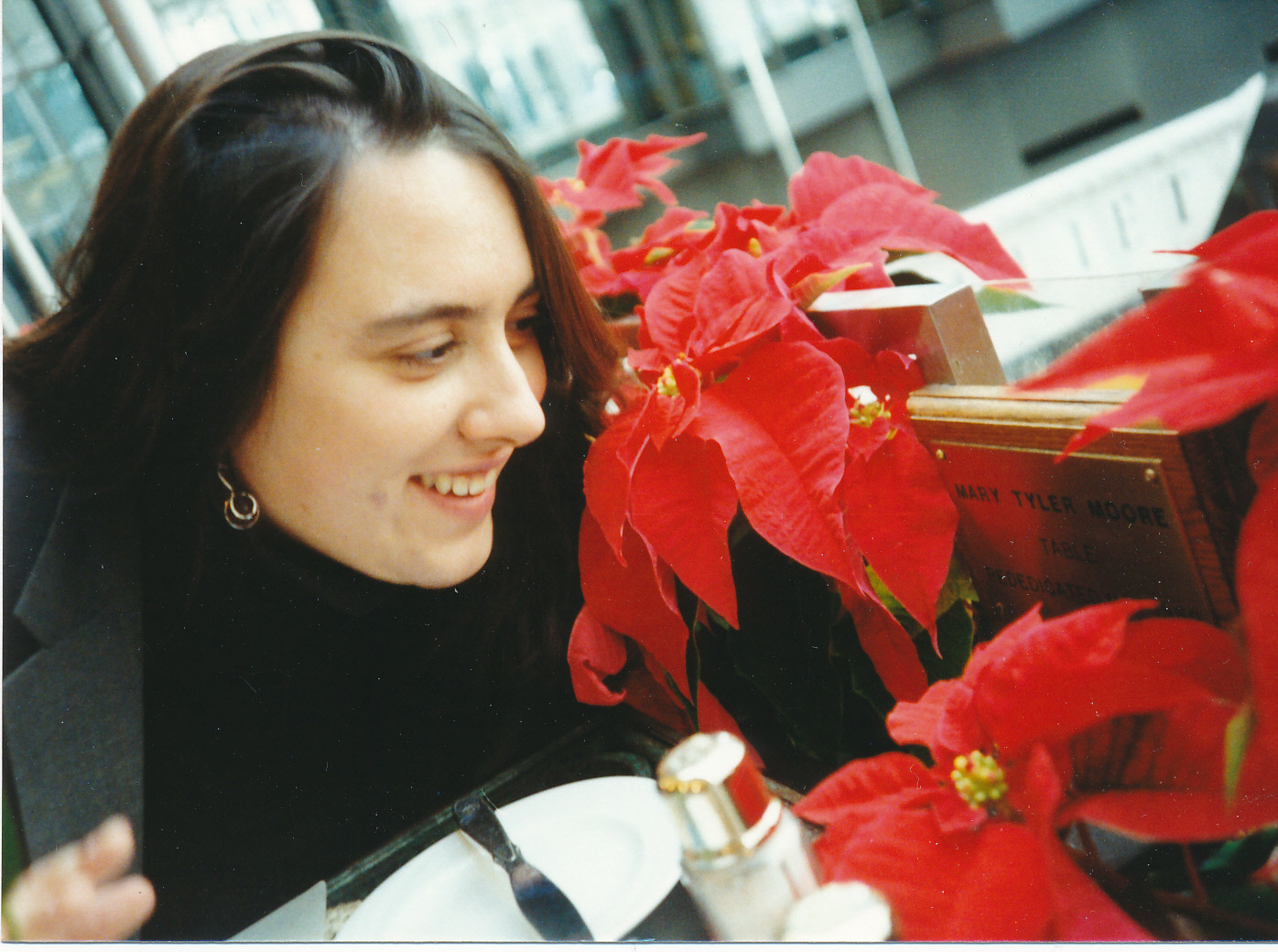
When I think back to all the years I’ve known Sandy, the most memorable moment was not giving a reading together or sharing newly published work, it was the day I took her on a tour of Mary Tyler Moore locations in Minneapolis. When I followed my then-partner to that city in the early 1990s, I tried to find a guide to places associated with the television show of my childhood, but there were none. I had to go to the library and look up newspaper articles from the days when the producers came to town to film the shots that would become part of the opening montage. I peered at the microfilm, writing down the address of the house that stood in for Mary’s, the corner where she tossed her hat, and the lake where she fed ducks. When Sandy arrived with her friend Kate Flaherty, I took them on the tour, surprising them with the last stop: the restaurant table in a downtown atrium where Mary and her friend Rhoda ate lunch. A plaque marked it as the “Mary Tyler Moore” table. Sandy was so excited, she ran downstairs to an office supply store to buy tracing paper, and we made tracings of the plaque in blue, red, and orange crayon.

I look at our young selves, just straddling thirty, in the pictures from that day, and feel a tremendous gratitude: that we found our callings — all of them — and that I’ve shared mine with the incomparable Sandy Yannone.

Posted in Uncategorized | Tagged | 5 Comments