100 Notable Small Press Books, 2025

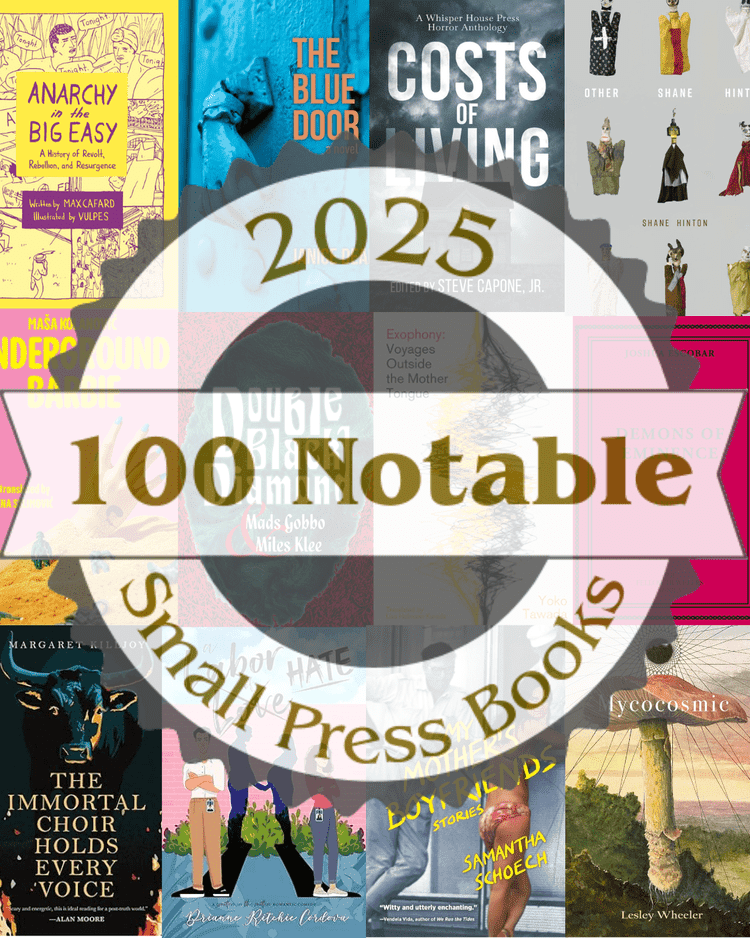
Today LitHub has published a list of 100 notable small press books of 2025, and I had the great honor of choosing two of them: The River People, by Liz Kellebrew, and Sixty Seconds, by Steven Mayfield.

When the call came about a year ago to participate in the project, I signed up, happy to get involved in something that would jumpstart my reading. I had been struggling to read for some time.

In 2023, according to my Goodreads list, I read only two books. I remember listening to them, walking my dog around the neighborhood, crying through some of Sequoia Nagamatsu’s How High We Go in the Dark and pausing Kiese Laymon’s Heavy to absorb his astonishing use of language and the welling of emotions is elicited.

Only two books? That can’t be. Maybe I forgot to post some.

Still, I know my reading time plummeted in recent years. A pandemic ravaged the world, and then my father died suddenly, my mother was diagnosed with Alzheimer’s, and our basement flooded and needed to be gutted and restored. Overwhelmed is one word for it.

But this year I was determined to carve out time for something I have always loved to do. For the project, I was required to choose three books to forward to the committee that determined the finalists. 

In the spirit of this project, here are a few other small press books I loved this year, not all of which were eligible to be included because they weren’t published in 2025:

  • Myriam J.A. Chancy’s Village Weavers (Tin House) is a gorgeous novel about friendship and how it changes over time. Two girls grow up into a world that treats them very differently.
  • In the title story of E.P. Tuazon’s collection, A Professional Lola (Red Hen Press), a family hires a woman to pretend to be their grandmother. She knows everything their grandmother knew. How is that possible?
  • The stories in Carrie R. Moore’s Make Your Way Home (Tin House) begin with a family curse from the past and end in an apocalyptic future. In between, women and men leave home and return, seeking love and connection.

Thanks to Miriam Gershow for doing all the hard work of making this project happen. Her novel, Closer, was published this year, and I can’t wait to read it.

Speaking of Goodreads: This year I decided to give five stars to every book I read. Writing books is hard work. Writing a disappointing book is hard. Writing a fantastic book is hard. And giving three stars — or two or one — to a work of art, no matter how poorly executed, just seems wrong. Well-done, writers. Five stars to you all!
 

Posted in fiction, Literature, Uncategorized, Writers | Tagged , , , , , | 2 Comments

The Four Stages of Moving to Portland

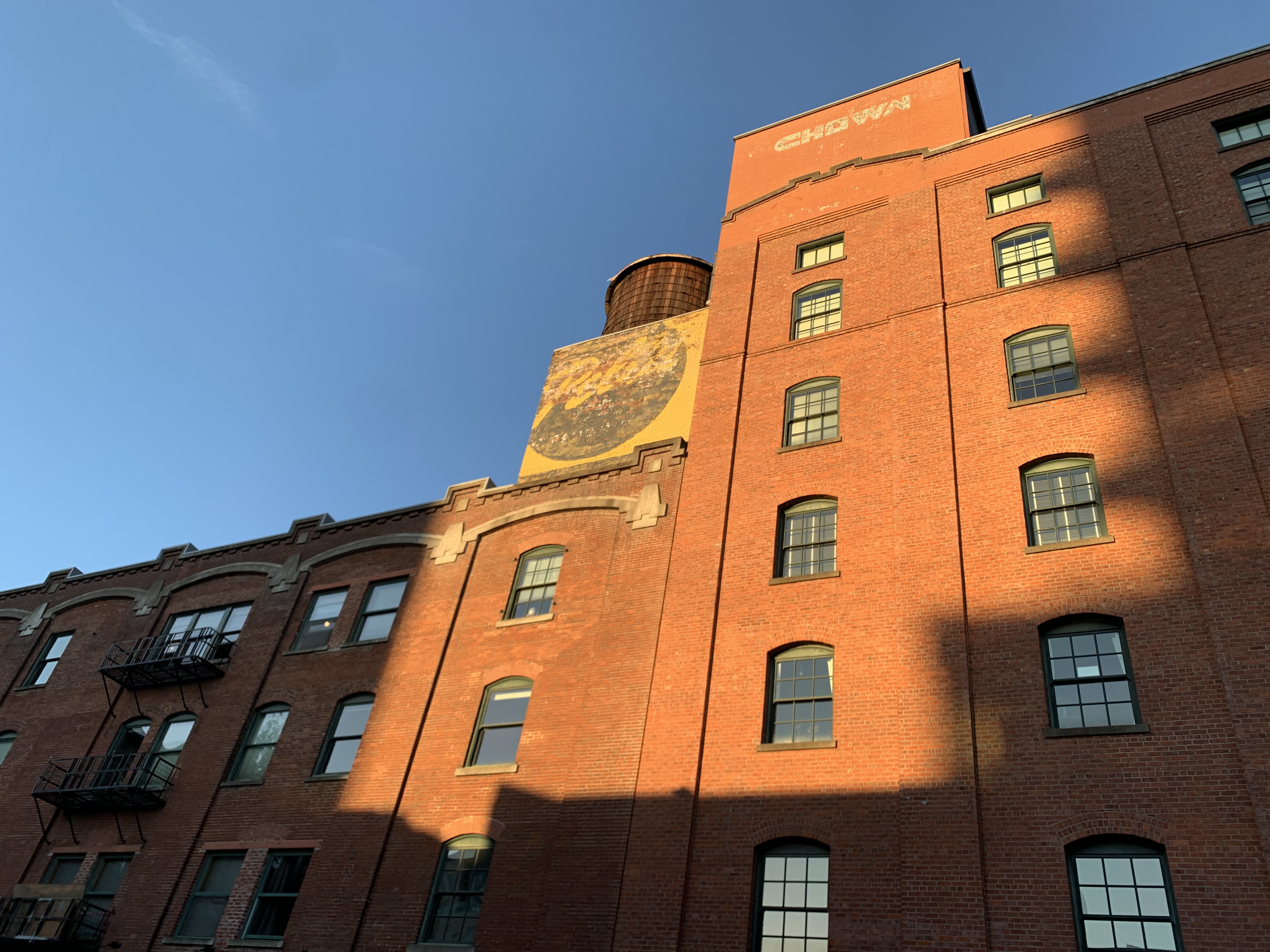
An old brick building with the sun shining on it and the word "Chown."
The Chown Pella building, at the center of the Pearl District, was the first historic warehouse in the neighborhood to be converted into condos. That was thirty years ago.

Note: Non-Portlanders might want to listen to the theme from “Portlandia” while you read this post. Portlanders: This is your cringe warning. 

Stage 1: Disbelief

After spending most of our lives in Seattle, Arline and I moved to Portland in May. We had made the decision to move in February after a real estate agent told us that the best time to sell was in spring and if we didn’t sell this year, we might as well wait another year. Given the uncertain political and economic environment, we decided not to wait.

For the weeks after we moved, we were in disbelief. What had we done? Instead of walking our dog on the sidewalks of our placid North Seattle neighborhood, we walked her past tourists taking selfies in front of Powell’s City of Books, past cocktail bars and brew pubs, past the occasional tent. Laika peed on patches of fake grass installed around street trees. How had this happened? It couldn’t be permanent; we must be on vacation. 

One of the more surreal experiences was exchanging our blue-and-white license plates for ones with a green tree flanked by mountains. We were Oregonians now. Our cars said so.

Stage 2: Delight

Disbelief edged into delight as we got to spend day after day in Portland, not just a weekend. We tried restaurants we had always wanted to try. We ran into our friend Jennifer at her favorite coffee shop. We took new-to-us hikes in local parks. From our centrally located condo, we walked to a protest, to the pride parade, to the farmer’s market. One night, after eating pizza at The Turning Peel, Arline drove us back home and I put the “Portlandia” theme song on repeat in the car. (Are you listening to it now?)

Moving to a new city has reminded me of traveling abroad, how the unfamiliar sights and sounds drown out the chattering of my monkey mind and make me feel more alive, part of something larger than myself. It is exhilarating.

Stage 3: Anxiety

To be honest, I can’t really say I’ve ever gone through an anxious “stage.” Anxiety has been my constant companion in this life.

Still, she’s been accompanying me around these Portland streets more than usual. What if we’ve made a mistake? What are the unforeseen consequences of the move?

One thing we hadn’t thought of: a friend in Seattle had sudden gall bladder surgery and we weren’t able to hop in the car and bring her flowers; a family member is very sick, and we can’t see her as often as we would like. Still, we’ve been to Seattle three times already, and we have been able to see most of our loved ones recently. 

State income taxes are higher than we had expected. I don’t know why I didn’t run the numbers before we moved. But Arline reminds me: we’ve always voted in favor of a state income tax in Washington. The truth is we can afford to pay more progressive taxes. 

Some of my anxiety is less about moving to Portland and more about trying to decide when to retire. Because I teach remotely, I can still work at my Seattle college while living here. I run and re-run several financial calculators. I talk to our retirement advisor. And then I pour a glass of wine and watch the crows fly past our balcony. I am lucky to have options.

Stage 4: Acceptance

Almost three months into our move, it’s starting to feel real. Our evening walk with Laika to the patches of fake grass has become routine. Arline has made up a new budget; we are trying to eat out less and cook more at home. My monkey mind chatters, but I am determined to stop running financial calculators for the time being. And we just enjoyed another First Thursday of gallery hopping in our neighborhood.

Now, when we see Washington State license plates on a car moving uncertainly, we laugh and say: What are you doing here taking advantage of our lack of sales tax? Go back to where you came from, Washingtonians! And we drive around our new city, incognito, the windows up so locals won’t know we’re playing the theme from “Portlandia.”

Posted in Aging, Portland, Uncategorized | Tagged , , , | Leave a comment

Leaving Seattle

A grainy photograph of a mother, daughter, and son in front of a white Cape Cod house in Seattle.

In the late 1970s, I used to peruse the bootlegs in a record store in Seattle’s University District. They had plain white sleeves with xeroxed images of the artists tucked in the plastic wrap. I still have my bootleg of Joni Mitchell’s early songs, some of them never otherwise released. 

This kind of random memory kept coming to mind last month as my spouse Arline and I packed our house in preparation for moving to Portland. It was as if I was leaving, not Seattle, but my childhood. 

My parents moved us around the country, following my father’s academic career, until I was twelve. Just before my father was about to get tenure in Green Bay in 1975, he resigned, piled us into our Valiant, and drove us to Seattle, where he worked for the University of Washington on short-term contracts for many years before becoming a senior lecturer. My mother ran the Forestry Library.

In the picture above, my mother, brother, and I stand in front of the house my parents had just bought for $36,950 (taxes were $320.37 that year). A camellia by the front door would be a monster shrub by the time Arline and I bought the house from my mother in 2022. In between, I left Seattle for college and graduate school and returned in 1994. 

Seattle has always been a special place for me. When I was a child, we would drive from my maternal grandparents’ house in Spokane to Seattle, where my paternal grandparents lived, and as we came down from Snoqualmie Pass and drove across Lake Washington, the light glanced off the waves and the air turned fresh and cool. 

On our visits, we would take ferries across the Sound just to ride a ferry. I would go on the amusement park rides at Seattle Center. At my grandparents’ house, I would sit on the floor in front of the color television and watch J.P. Patches, the clown mayor of the city dump. One year he looked right at me and wished me a happy birthday.

When I was gone as an adult for eight years, I never doubted that I would someday return to Seattle. And I did. And I lived there three more decades. But as I approach retirement, Arline and I wanted to move to a more walkable, more affordable city. We found a lovely condo next door to one of the best bookstores in the world, Powell’s. Most everything we need is close by. We can walk to restaurants, several grocery stores, and a huge city park. 

The leaving has been bittersweet, of course, mostly because we’re three hours further from many of our friends and family. What has surprised me is the surge of nostalgia for a city that no longer exists. In that city, my grandmother is playing the piano and I am singing “Sur le Pont” in the living room with a view of sailboats on Lake Washington. In that city, my father is alive and pouring wine on the deck as we admire the rhododendrons and azaleas in his garden. In that city, my mother doesn’t have Alzheimer’s. It’s the city where I don’t have to be grown up.

Seattle will always be the city of my heart. I think of how it comes into view as the ferry from Bainbridge approaches. The Space Needle. Smith Tower. The black skyscraper people call “the box the Space Needle came in.” We stand on the deck and feel the ferry humming through the water. The gulls wheel and call. Above us, on those wondrous summer days, are the bluest skies we’ve ever seen.

Posted in Aging, Family | Tagged , , | Leave a comment

One Writer’s Life: December 2024

Red van parked facing Mount St. Helens, which is mostly grey.
Rioja the Red at Mount St. Helens, October 27, 2017


Taking stock of your year? Here’s mine:

Project 1: Creative nonfiction

My father was alive one day in May 2021 and dead the next of a massive stroke. As executor, I became the keeper of the paperwork: obituary, hospital bill, court filings, and on and on.

My mother, recently diagnosed with Alzheimer’s, channeled her grief at my father’s death into rage at me.

Executrix — a memoir made of hermit crab essays, each written inside the shell of a document that crossed my desk in the year after I was named executor.

By the end of 2024 I had substantially revised this piece and was sending out a manuscript called Executrix and Other Essays.

Project 2: Novel

May 18, 1980: Mount St. Helens erupted. A high school junior, I watched it from the front yard.

2017: My wife Arline and I camped near the mountain and went to the visitor’s center and observatory. Reading the exhibits sparked something in me: I remembered Harry Truman, the old man who refused to leave his lodge on Spirit Lake; Dixy Lee Ray, the governor, whose decisions were widely criticized (and who was rumored to be a lesbian); the dramatic footage from airplanes and helicopters. I began writing a novel.

2017-2024: I wrote several drafts of the novel and got excellent feedback from readers, including the members of my writing group. Writing was interrupted by a pandemic and my father’s death. Still, the novel nagged at me. Something about it wasn’t working, and I couldn’t figure out how to fix it.

2024: I decided to make a radical revision. And with the 50th anniversary of the eruption only six years away, now was the time to do it. I replotted the novel, threw out some point-of-view characters, and began to carve out an hour each morning to write during the academic year, something that has been very difficult for me to do in the past. But somehow I have managed it this year.

December 31, 2024: I have about 27,000 words of a new draft, about half of those words brand new. It feels much stronger. As I told a writer friend this year, my goal is to write a novel I can be proud of. Of course, I would love to see it out in the world, but that’s secondary. I’m writing because I love to write and because I really, really want this novel to fulfill my ambitions for it.

Project 3: Poem

Oh, and I wrote a poem that’s going to be published in an anthology of poems about Washington State birds. Is that not cool? To go with my poem, I made a playlist of bird songs, just for fun (“To everything tern, tern, tern….”).


Posted in creative nonfiction, Death and dying, Essays, Family, fiction, Mount St. Helens, poetry, Travel, Uncategorized, writing | Tagged , , , , , , , , | Leave a comment

One Writer’s Life: November 2024

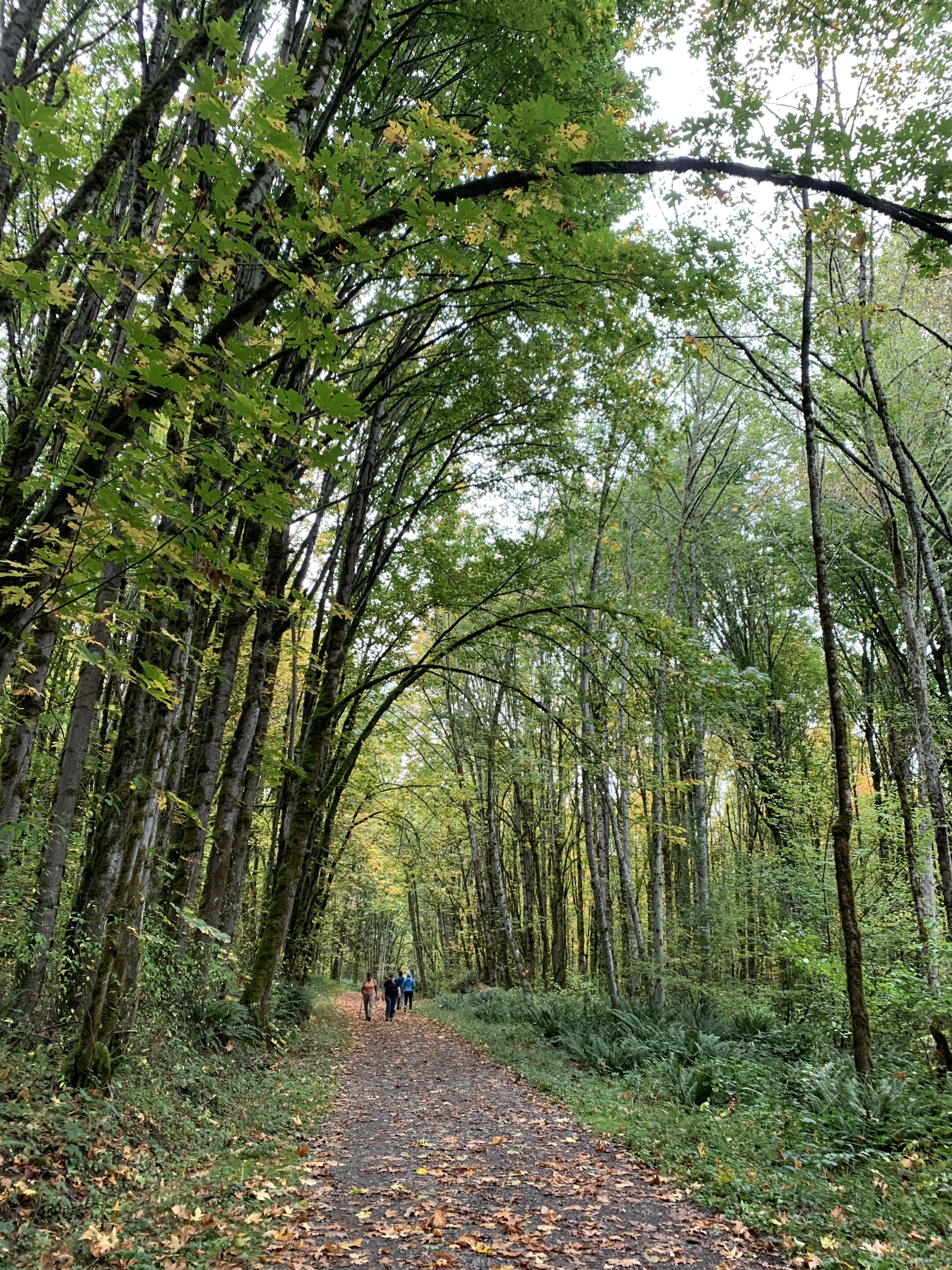
A forest path with tall trees in autumn

A few weeks ago I was in my campus office teaching when my computer suddenly rebooted, kicking me out. It took several minutes to get back into Zoom, but when I did, my students were still there, kindly waiting for me. Later, a young man came to figure out what had gone wrong with my computer. He told me that he had taken my English 101 class over Zoom in 2020, had gone on to earn a bachelor’s degree, and was now working at our college helping students and faculty with technology. I didn’t recognize him because I had only seen his face in a tiny square on my computer, and it reassured me to learn that he had appreciated my class back when I was so new at Zoom teaching.

I keep thinking about this young man. He told me he became a citizen last year and has petitioned to bring his mother. If she is able to come, she can then petition his younger siblings, something he can’t do. He knows that moving to the States and leaving her community won’t be easy for his mother, and he knows that even if she comes, she might not want to stay, but they are going to try.

Why is it so hard sometimes to remember how we are all connected? I helped this student with his writing in English, and a few years later he helped me with my computer. Most of the women who care for my mother, who has Alzheimer’s, are immigrants; they could be the mothers of my students. I’m old enough now that many people I taught years ago have children and grandchildren. Who knows how they have directly or indirectly touched my life? We can’t always see these connections, but we are enmeshed in them.

As I grieve and fear the results of the election, I think about these connections, how they strengthen and how they fray. I’ve been reading Ross Gay’s book, Inciting Joy, and in one essay he describes working on a project in Indiana to create a community orchard with the motto “free fruit for all.” He says:

Planting that orchard…reminded me, or illuminated for me, a matrix of connection, of care, that exists not only in the here and now, but comes to us from the past and extends forward into the future. A rhizomatic care I so often forget to notice I am every second in the midst of…. Despite every single lie to the contrary, despite every single action born of that lie — we are in the midst of rhizomatic care that extends in every direction, spatially, temporally, spiritually, you name it. It’s certainly not the only thing we’re in the midst of, but it’s the truest thing. By far.

I am grateful for the arrival of this young man in my office to remind me of this matrix of connection. And to remind me that the dream of America is a living dream, and we can continue to dream it.

Posted in Essays, Faith/belief, Literature, Writers, writing | Tagged , , , , | Leave a comment

One Writer’s Life: September 2024

Tom Spanbauer, who was about 40 at the time, and me.
Caption: Tom Spanbauer and me

In the summer of 1996 I took a class called “Dangerous Writing” from a writer I didn’t know named Tom Spanbauer. Portland State University ran summer classes in Cannon Beach, Oregon, and although a week in an upscale beach town was a stretch for me, I made a reservation at the Argonauta Inn for a room euphemistically called The Lower Lighthouse. It was a converted garage.

On Monday morning, I joined the twelve or so other students in a classroom at the local elementary school. We all looked at our notebooks, coffee cups, and sandals as we waited for the teacher. He finally walked in and apologized for being late. He had been so anxious to come in, he said, that he had trembled for ten minutes in the hallway. People reassured him, nodded, thanked him for being brave. I immediately relaxed. In his vulnerability, he had given me permission to admit my own.

That day, Tom gave us an assignment to write something that felt dangerous to us. Tuesday and Wednesday, we read our work out loud and discussed it. Tom praised places that felt dangerous, pointing out cliches and pushing us to do better. I left my critique realizing that I hadn’t scared myself enough. I was writing about driving through South Dakota with my family as a child and being afraid of the Native kids in a hotel swimming pool. I had to be willing to expose my shame about my parochialism and racism. I knew, when I completed a second draft, that I had touched that nerve in myself.

Thursday and Friday we shared our revisions, and Tom’s reaction was the confirmation I needed. I sent it to Raven Chronicles, which published it in 1997.

The photo of Tom and me above was taken one evening in his cottage near the beach. He must have invited students to hang out; I remember a few other students being there. He was playing Meshell Ndegeocello’s album Peace beyond Passion, which I had at home, and I vividly remember piping up, “She identifies as bisexual!” Tom smiled at me like a kindly uncle and repeated what I had said. I heard in his voice how earnest I had sounded. But I didn’t feel shamed; I felt loved.

It was thrilling to have a gay teacher. I had been out for a decade, but it was hard to be out in my new community college job, with my family, and in the world. In his class and in his company, I felt whole.

Tom hosted a weekly workshop at his home in Portland, and I tried to figure out how I could join it. I went a couple of times and chatted once with Chuck Palahniuk, one of Tom’s most famous students. The afterparty went late into the night. One of those nights, as people drifted away, I found myself alone or mostly alone with Tom in his living room. He told me some things about his life and his writing. I don’t remember what I told him. He was so present, listening so intently, I felt as if he was looking right into my soul. I was more than a little in love with him.

Ultimately, I couldn’t make the three-hour drive to the workshop every week, and I saw him only a couple of times after that, once when he read at Bailey/Coy Books in Seattle.

Tom died in September at age 78. In his most celebrated novel, The Man Who Fell in Love with the Moon (although Faraway Places is my favorite), a character says, “Story goes if you live your life being true to your heart, you’ll find a place like this where you can come to when you die, and you can tell the story of your life out loud to all of nature listening. Death has got to wait until you’re done with your singing and dancing and whatever else you got to do to get your story told.” Tom lived true.

Posted in Death and dying, LGBT, Literature, Uncategorized, Writers, writing | Tagged , , , , | Leave a comment

One Writer’s Life: August 2024

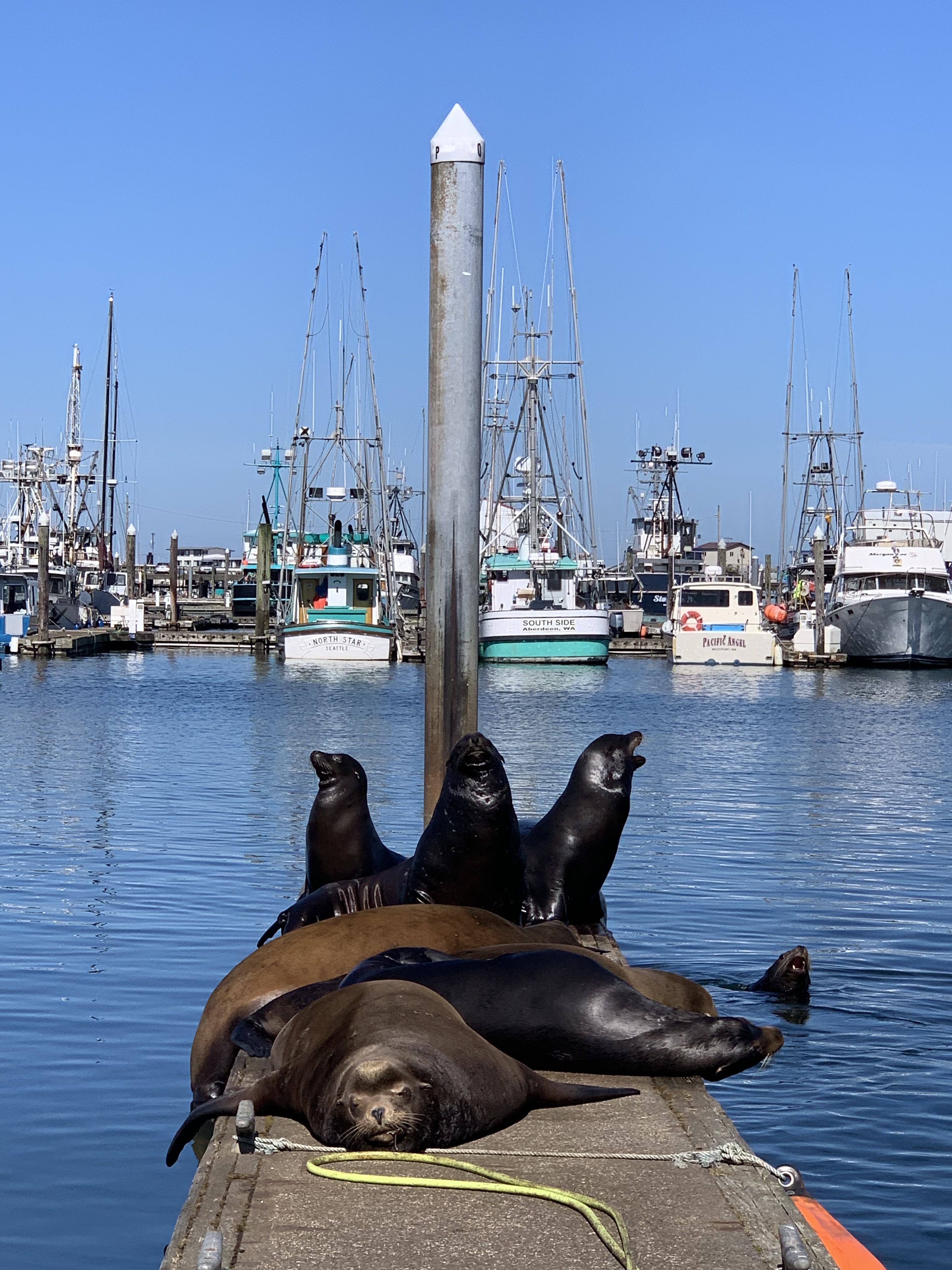
Sea lions sunning themselves on a dock in the Westport marina
Caption: Sea lions in the Westport marina

The last week of August, I spent a few days in Westport, Washington, with my writer friend Jennifer D. Munro. I had intended to work on my book about the Mount St. Helen’s eruption, but there wasn’t enough time to do any significant work on a novel, and I had been thinking about a recent call for poems about birds. Jennifer, who has been birding for years, brought her bird guides and binoculars, and it was the perfect time to revise the two poems I’d drafted and start a new one.

One of my poems is about the Brown-headed Cow Bird, which lays its eggs in other species’s nests as a “brood parasite.” On our first evening walk, Jennifer pointed out a Cow Bird sitting on a wire. My first sighting!

During our stay, I made a playlist of bird songs, including the famous one that goes, “To everything, Tern, Tern, Tern.” I listened to the playlist on the drive home.

Several weeks before, I read E. Lily Yu’s Break, Blow, Burn, and Make while I accompanied my mother in the hospital. In that liminal space between sickness and health, between life-threatening diagnoses and life-healing care, Yu’s book was clarifying and inspiring. The writer’s work is a sacred act of love, she argues: “The artist dies to self, burns, and becomes transparent not out of self-hatred but out of love, so that something greater than the self might come into being.”

Sometimes when I’m writing, I feel as if I’m fiddling while Rome burns; I should be marching in the streets or, at the very least, writing to my elected officials. But Yu argues forcefully for the value of time spent apprenticing ourselves to art: “What greater threat to the rulers and authorities and powers of darkness than a moth that, for the love of light, is willing to join itself to flame?…Darkness would be driven back before that extravagant love.”

I keep her words in mind as I sit down to work.

Posted in Faith/belief, Literature, Travel, Uncategorized, Writers, writing | Tagged , , , , | Leave a comment

One Writer’s Life: July 2024

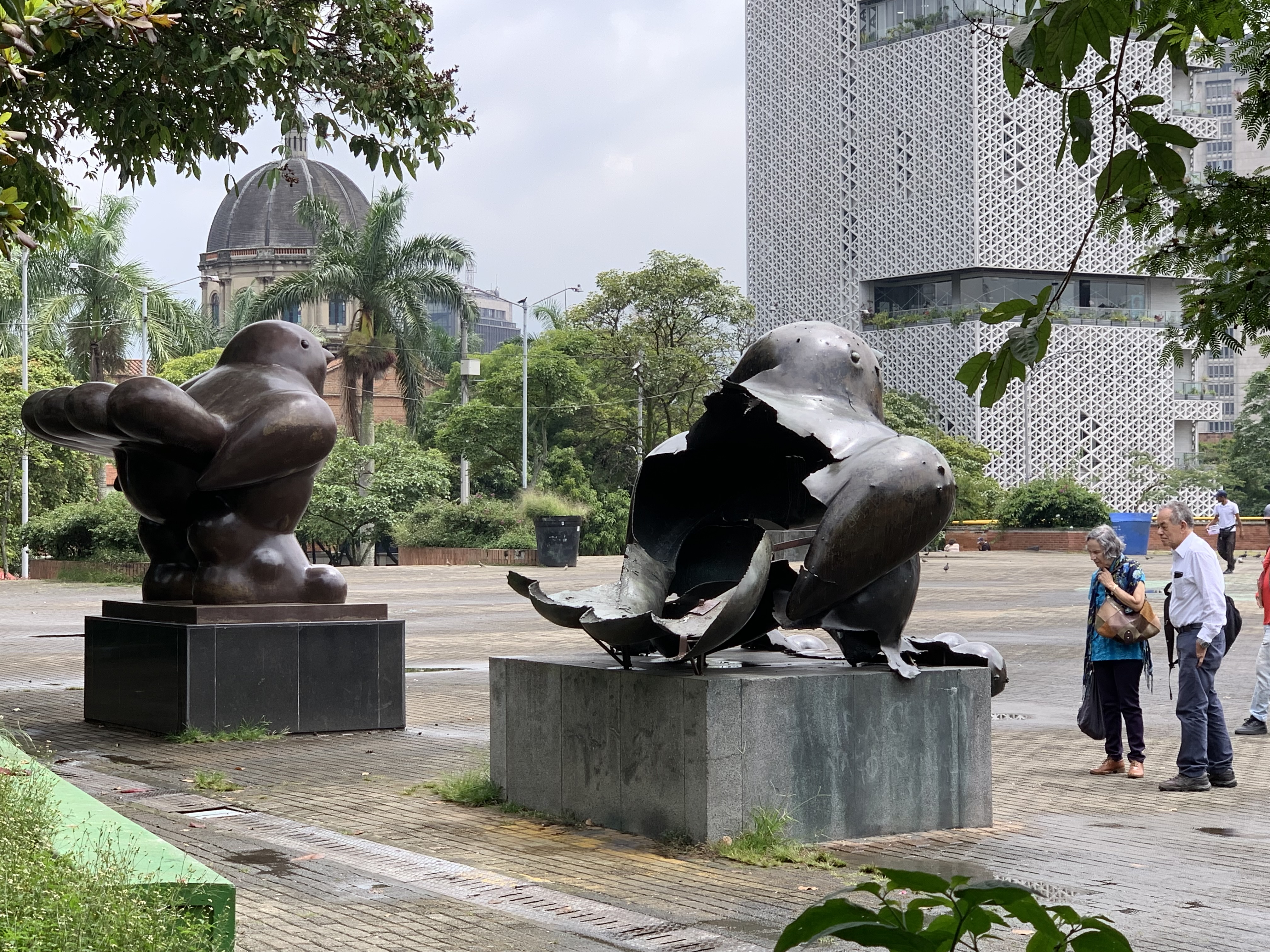
Two bird statues in Medellín by Botero. One is intact and one was half blown off by a bomb.
Caption: In 1995 in Medellín, terrorists set off a bomb during a music festival, killing 30 people. The statue on the right was destroyed. The sculptor, Fernando Botero, had a new bird placed next to the destroyed one as a memorial.

In Medellín and Bogotá, Arline and I attended a wedding, strolled the botanical gardens, drank great coffee, and enjoyed the enthusiasm of Colombian fans as they rooted for their team in the Copa América. We never felt unsafe, but had we walked those streets thirty years before, we might well have been terrified. Fruit of the Drunken Tree by Ingrid Rojas Contreras, who grew up in Bogotá, tells the stories of two girls, one wealthy and one poor, who lived through those times. I read it while we were traveling. By the end of the novel, some characters have experienced such brutality that they will never be the same.

When I was growing up, I got the impression that all the bad things had happened in the past and would never happen again. I don’t know how I absorbed that message while images of the Vietnam War, civil rights movements, Kent State, and Watergate played on television, but somehow I did. So the rise of a truly evil political movement in the United States took me by surprise. The audacity of those involved continues to shock me even as I recognize that bad things never stopped happening and that the seeds of this political movement were planted decades ago. Rojas Contreras’s novel was a reminder that as bad as these bad things can be, at the heart of our lives are the relationships we forge with the people around us. Our own actions, no matter how seemingly insignificant, can hurt others or ease their way.  

On the theme of reading while traveling, in July I finished reading Thinning Blood, a memoir by Leah Myers. At a writing conference in Port Angeles in April, a presenter mentioned her book, and I picked it up at Port Book and News. Myers is a member of the Jamestown S’Klallam Tribe, a people with a long history on the Olympic Peninsula. But Myers was raised mostly in Georgia with little contact with the tribal community, and if she has children, they will not be eligible for membership. In the memoir, she grapples with what her racial and ethnic identity means to her and to the people around her.

Recently, a presidential candidate questioned his opponent’s identity, and while his racism was overt, it made me think of how often well-meaning white people struggle to understand ethnic, racial, and cultural identity. Part of the problem is that they don’t realize they have such an identity — there are few opportunities to learn about it in school and little discussion in the culture at large — so they can be dismissive of the whole concept of identity, especially when it’s dynamic and complex (which it usually is). I think of our one-year-old great grandson, who is Mexican/Filipino/Panamanian American. When he gets that question, “What are you?” — and he will — he will have to decide how to answer. Or whether to answer. I appreciated Myers’s attempts to figure out her own answer to that question.

As I revised my novel on the Mount St. Helen’s eruption in July, these books reminded me of the solemn obligation we have as writers to tell our stories and histories as truthfully as we can. Edna O’Brien, an Irish writer with whom I was not familiar, died this month, and The Paris Review reprinted an interview with her. I was struck by these words: “Writing is a vocation, like being a nun or a priest…. Whether a novel is autobiographical or not does not matter. What is important is the truth in it and the way that truth is expressed.”

Posted in Justice, Literature, Racism, Travel, Uncategorized, Writers, writing | Tagged , , , | Leave a comment

Thirty Days Thirty Poems

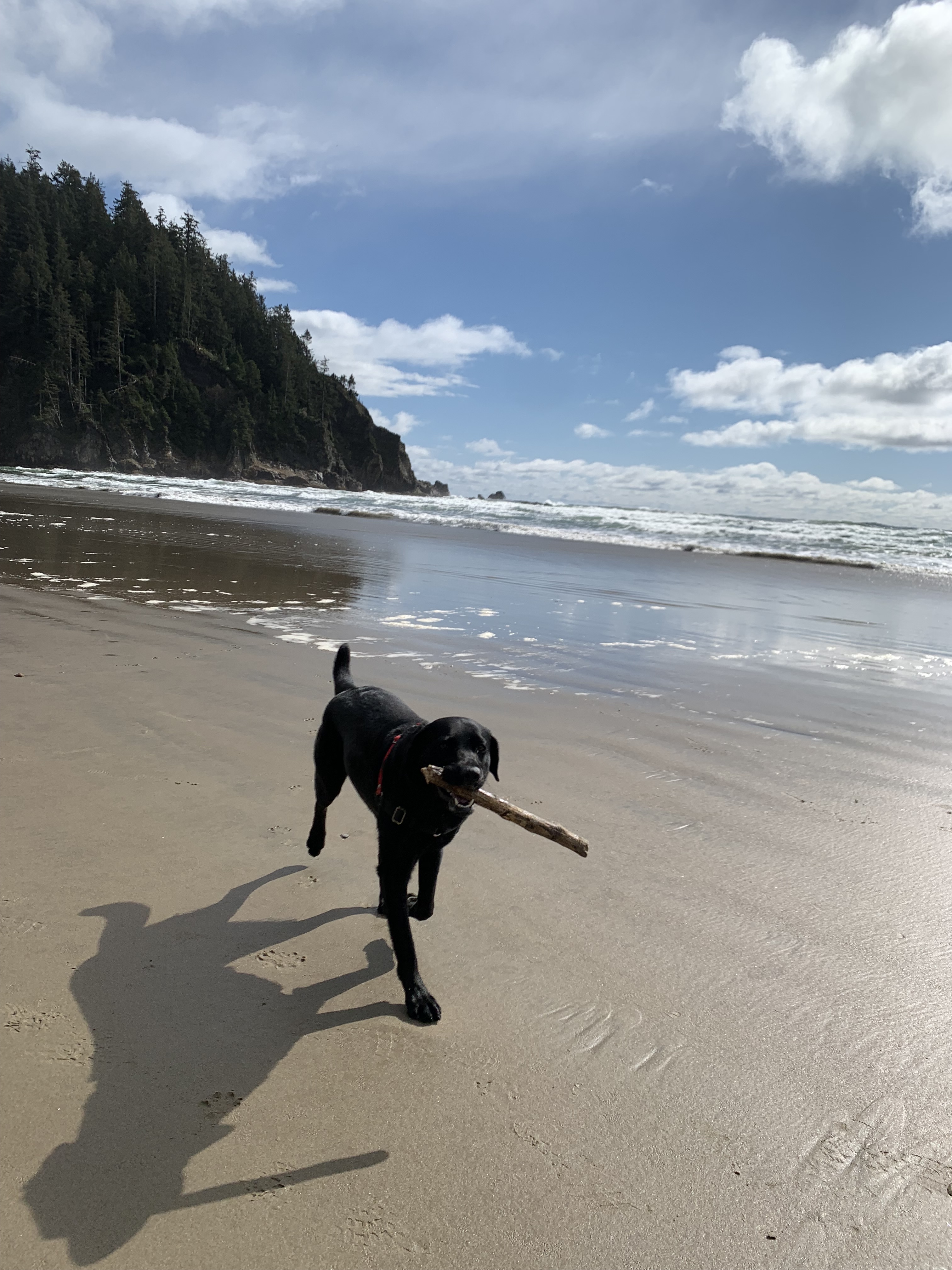
Black lab Laika on the beach with a stick in her mouth.
My assistant, Laika

Over twenty years ago I fell in love and wrote a flurry of poems because that’s what new lovers often do. But when new love settled into daily love, I returned to prose. Now I’m writing poems again, this time because I’ve fallen in love with living and reading and writing again.

For the first three years after the pandemic began, I could barely concentrate to read, let alone write. My father died, and it fell to me to handle his estate and figure out how to care for my mother, who has Alzheimer’s. Many days, all I could do was listen to audiobooks while walking Laika.

But as the most intense grief ebbed and probate closed, I began to feel stirrings of the need to write again. My friend, writer Jennifer Munro, suggested a workshop with Sage Cohen, writing a poem a day for the month of April. Why not? About thirty of us joined a Facebook group and responded to the prompts in Sage’s book, Write a Poem a Day: Thirty Prompts to Unleash Your Imagination. We gave each other feedback, focusing on what surprised, startled, and moved us. Sage generously commented on every poem.

Each morning, I read the day’s prompt and headed out with Laika for our walk. Instead of listening to a book, I spoke lines into my phone. Back at my desk, I had the seed, and the poem grew from there.

The poems I wrote are new and raw and not ready for publication. But what matters is that the writing was my morning meditation, and it brought my writing self back to life. And not only the writing — the reading! Sage’s book introduced me to poets I didn’t know, like the Turkish poet Nazim Hikmet, whose poem “Things I Didn’t Know I Loved” is one I didn’t know I needed. Oh, the last lines: “I didn’t know I loved so many things and I had to wait until sixty/to find it out sitting by the window on the Prague-Berlin train/watching the world disappear as if on a journey of no return.” As I look toward my sixtieth birthday later this year, I am so grateful for the gift of poetry this month.

Posted in Literature, Writers, writing | Tagged | Leave a comment

The Books that Traveled with Me

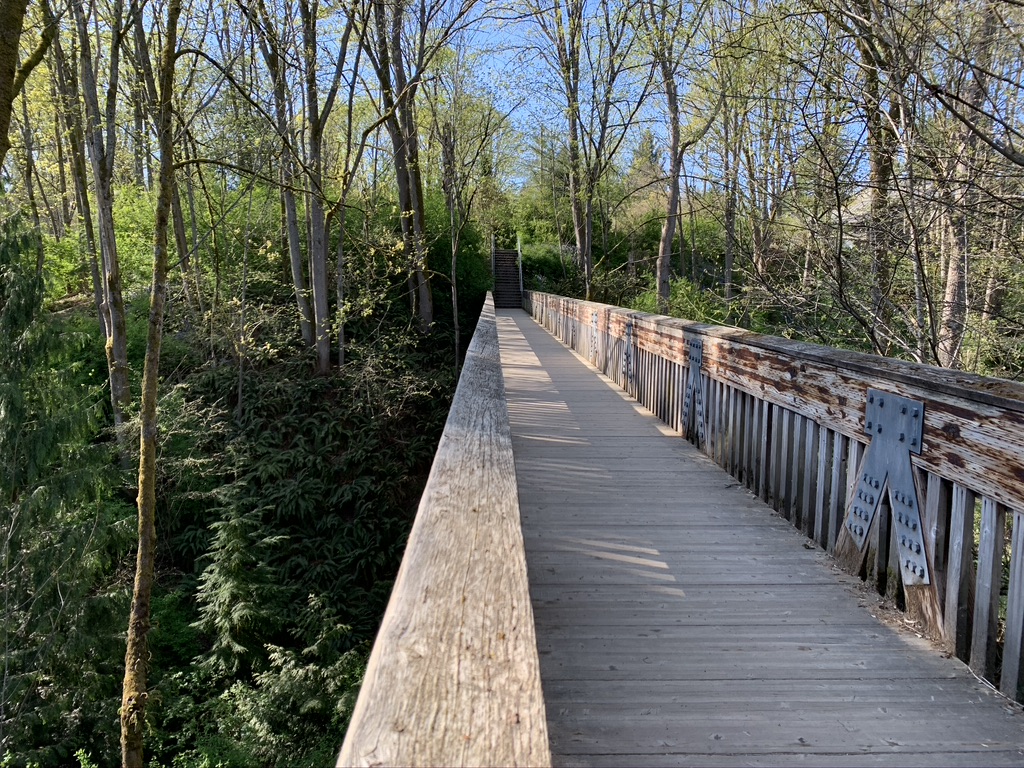
Wooden pedestrian bridge over Ravenna ravine

Maybe it’s the pandemic; maybe it’s social media rotting my brain; maybe it’s the grief and stress of handling my father’s estate and taking care of my mother, who has Alzheimer’s, but I have found it difficult lately to read the kinds of books that require me to turn a paper page. Instead, I plug in my earbuds and listen to audiobooks, most often as I walk Laika.

So as I review the list of books I read this way in 2022, I remember listening to one while crossing a bridge over the Ravenna Park ravine, another while painting a bedroom at my mother’s house before we bought it, and yet another while walking around the Wedgwood neighborhood where I lived in high school and now live again.

The highlights of the year were mostly science fiction. Tochi Onyebuchi’s Goliath is a devastating take on gentrification, as wealthy people from space colonies return to a devastated Earth to buy and fix up cheap houses. Oh, to have the drive and talent of Rivers Solomon, who wrote An Unkindness of Ghosts in their twenties. Generations of humans living in a spaceship have re-created a society resembling the U.S. in the early 19th century. It is not a good place.

I devoured the entire five-part Murderbot Diaries series by Martha Wells. Told by an android programmed to murder, the stories are funny and poignant and sweet. Kazuo Ishiguro’s Klara and the Sun is also told from an android’s point of view and has one of the saddest endings I can remember reading. Maybe androids are better humans than we are.

This is How You Lose the Time War by Amal El-Mohtar and Max Gladstone is a brilliant epistolary novel about two women warriors traveling through time to save the future. This was one book I wanted to re-read on the page for the beauty of the sentences.

I read some good books on paper, of course, including the inspiring graphic novel, We Hereby Refuse: Japanese American Resistance to Wartime Incarceration, by Frank Abe, Tamiko Nimura, Matt Sasaki, and Ross Ishikawa. Carol Smith’s memoir, Crossing the River: Seven Stories that Saved My Life, was a balm for grief, and Kate Jessica Raphael’s The Midwife’s in Town was a timely novel about the underground abortion movement.

As we begin a new year, I am grateful for the writers who work so hard to tell these stories. They travel with me down the sidewalks, along the trails, and across the bridges of my days.

Posted in Literature, Uncategorized, Writers | Tagged , , | Leave a comment