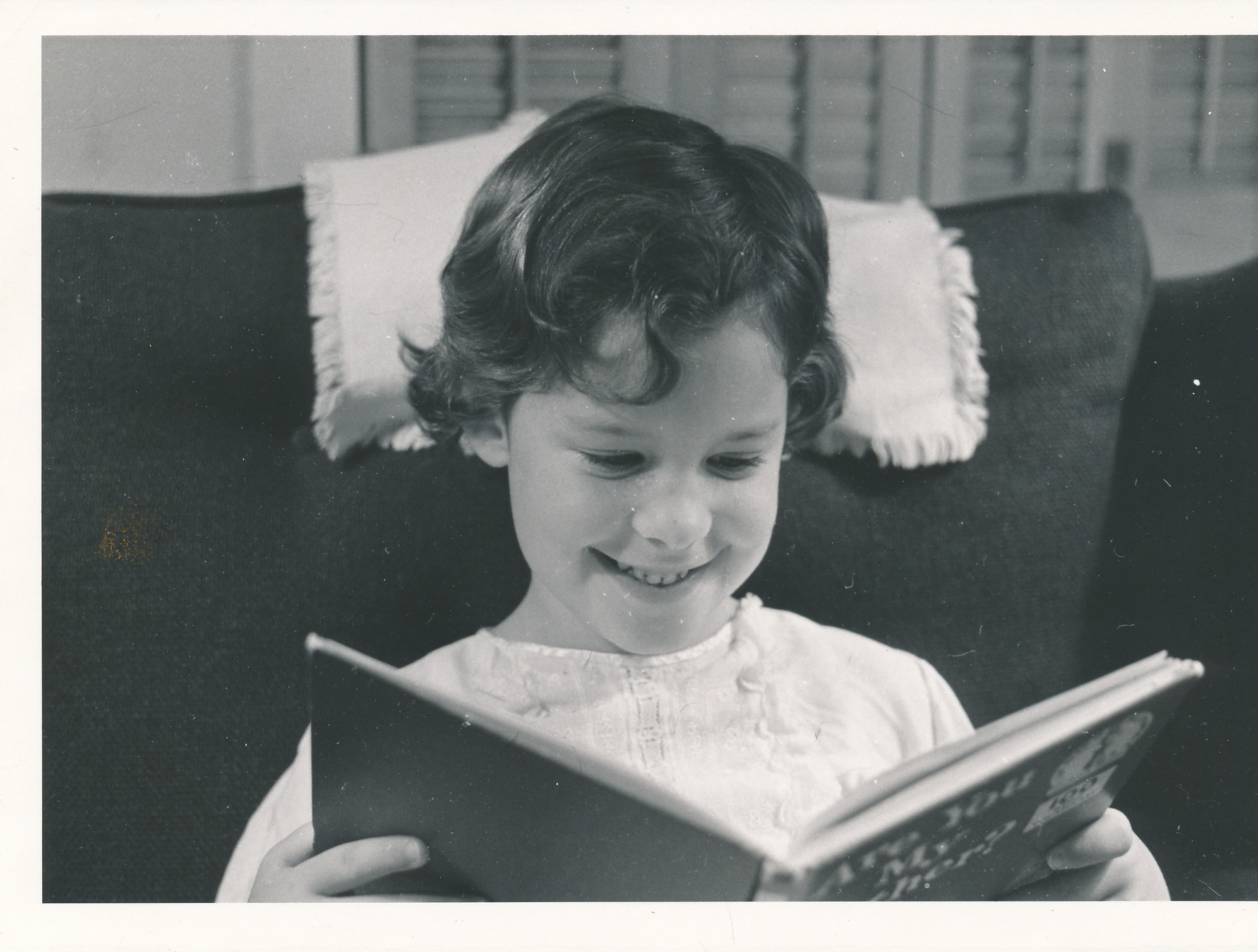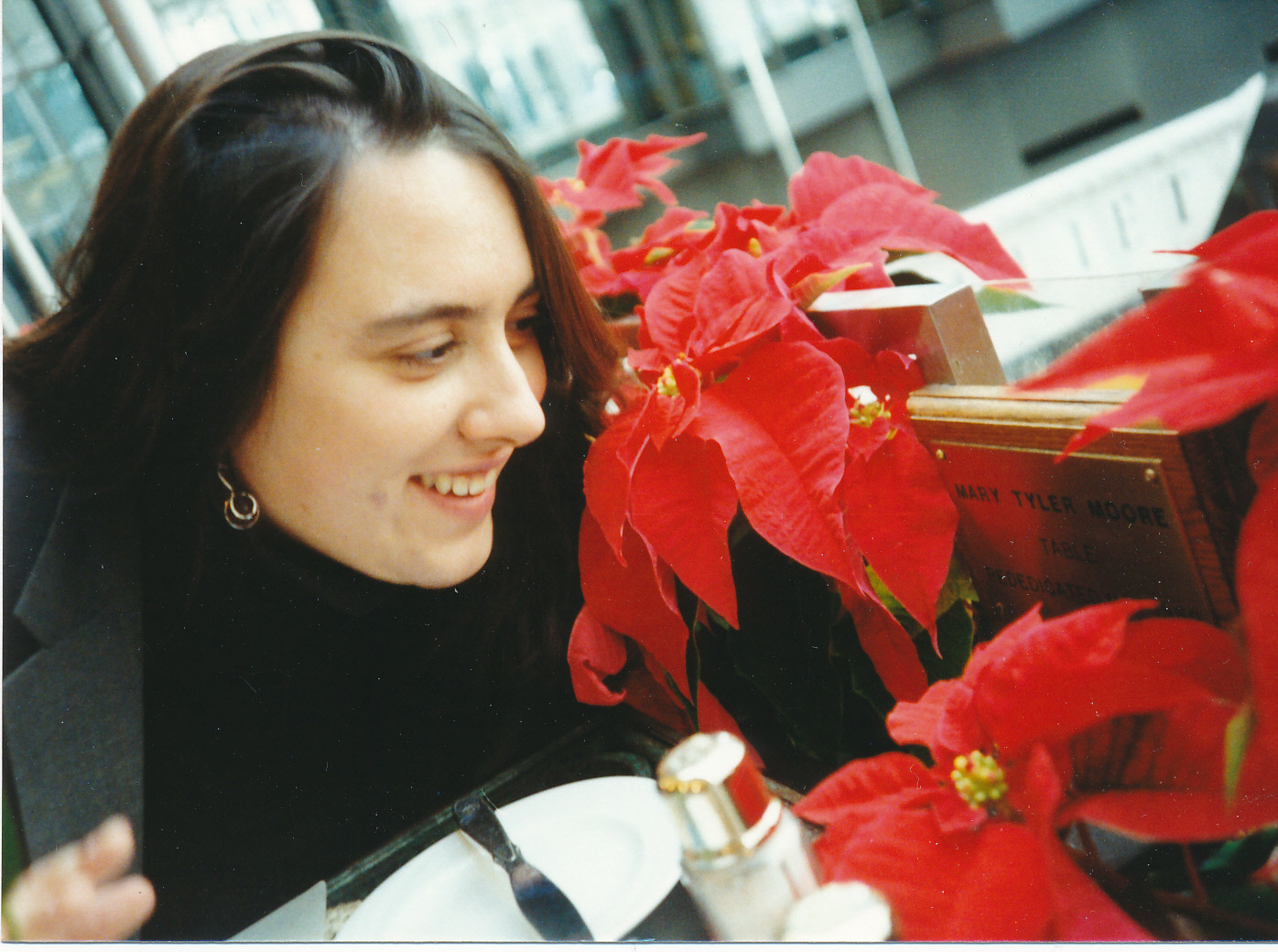
Sandy and the Mary Tyler Moore table plaque
Over twenty years ago my best friend in graduate school, Sandy Yannone, handed me a jadite Fire King mug filled with coffee and made me a waffle. Her fat tabby cat, Wally, aka Chew, sauntered between the legs of the vinyl stool I was sitting on. I don’t remember what prompted my angst that morning, but I know Sandy cheered me up. She drew, on a piece of paper I still have somewhere, the talent-discipline matrix, which showed that if I persevered in my writing, I could overcome any lack of innate talent.
Sandy was, in my opinion, the best writer in our M.F.A. class, a poet whose lines were both shimmering and tough. I didn’t envy her work because I loved her so much, this generous woman with an easy laugh, so prone to contagious obsession: kitschy 1950s dishware, Houdini, the Titanic. I seem to remember her writing about oranges a lot one year.
But I worried about my own abilities. Did I really have the discipline to keep writing? Could I write something worth reading? Worth publishing? Or was my attempt to write simply an opportunity to scorch my wings and fall back to earth?
While Sandy and I talked endlessly those years about writing and our professors and our possible writing futures, we also had a lot of fun. We poked through flea markets and antique stores, visited tacky Christmas light displays, and made a pilgrimage to Polly’s Pancake Parlor in the White Mountains of New Hampshire. Much of the fun I had in graduate school was in her company.
Last weekend Sandy came to my college to attend a conference, and we ate dinner in the suburban elegance of the Des Moines Anthony’s. Over panfried oysters and salmon cakes, we talked about how we feel about our writing careers now as we stroll toward our fiftieth birthdays and watch the odds of becoming the next Adrienne Rich or Margaret Atwood diminishing to zero.
We’re proud of the work we’ve written and published, and we have dreams of writing and publishing yet more. But we have discovered that what Anne Lamott said in Bird by Bird is true; it’s the satisfaction of the work itself, the everyday word-by-word, bird-by-bird — sometimes pleasurable, sometimes hard — that matters. And other parts of our lives matter, too, at least as much as our writing careers, if not more: the students who love to come into Sandy’s college Writing Center because she’s furnished it with formica tables like their grandmothers used to have; the work I do helping faculty be more culturally responsive; our partners, our friends, our parents and siblings and pets.
Cheryl Strayed, suddenly famous for her amazing book Wild, recently commented on the idea that she came out of “nowhere”: “There is a strong and vibrant literary culture that exists and thrives in this nation,” she wrote, “and it does not exist in a place called nowhere, whether you know about it or not. It’s the place where the writers work.” Sandy and I live and work in that place, and we will probably stay there. But it turns out that as much as our writing means to us, as much as our identities are entwined with our poems and stories and essays and the audiences that read them, we now see writing as just one element of our lives, and not always the most important. Sometimes it’s more important to meet with a student, at a desk or a formica table, and help her grapple with her own sentences.
When I think back to all the years I’ve known Sandy, the most memorable moment was not giving a reading together or sharing newly published work, it was the day I took her on a tour of Mary Tyler Moore locations in Minneapolis. When I followed my then-partner to that city in the early 1990s, I tried to find a guide to places associated with the television show of my childhood, but there were none. I had to go to the library and look up newspaper articles from the days when the producers came to town to film the shots that would become part of the opening montage. I peered at the microfilm, writing down the address of the house that stood in for Mary’s, the corner where she tossed her hat, and the lake where she fed ducks. When Sandy arrived with her friend Kate Flaherty, I took them on the tour, surprising them with the last stop: the restaurant table in a downtown atrium where Mary and her friend Rhoda ate lunch. A plaque marked it as the “Mary Tyler Moore” table. Sandy was so excited, she ran downstairs to an office supply store to buy tracing paper, and we made tracings of the plaque in blue, red, and orange crayon.
I look at our young selves, just straddling thirty, in the pictures from that day, and feel a tremendous gratitude: that we found our callings — all of them — and that I’ve shared mine with the incomparable Sandy Yannone.