
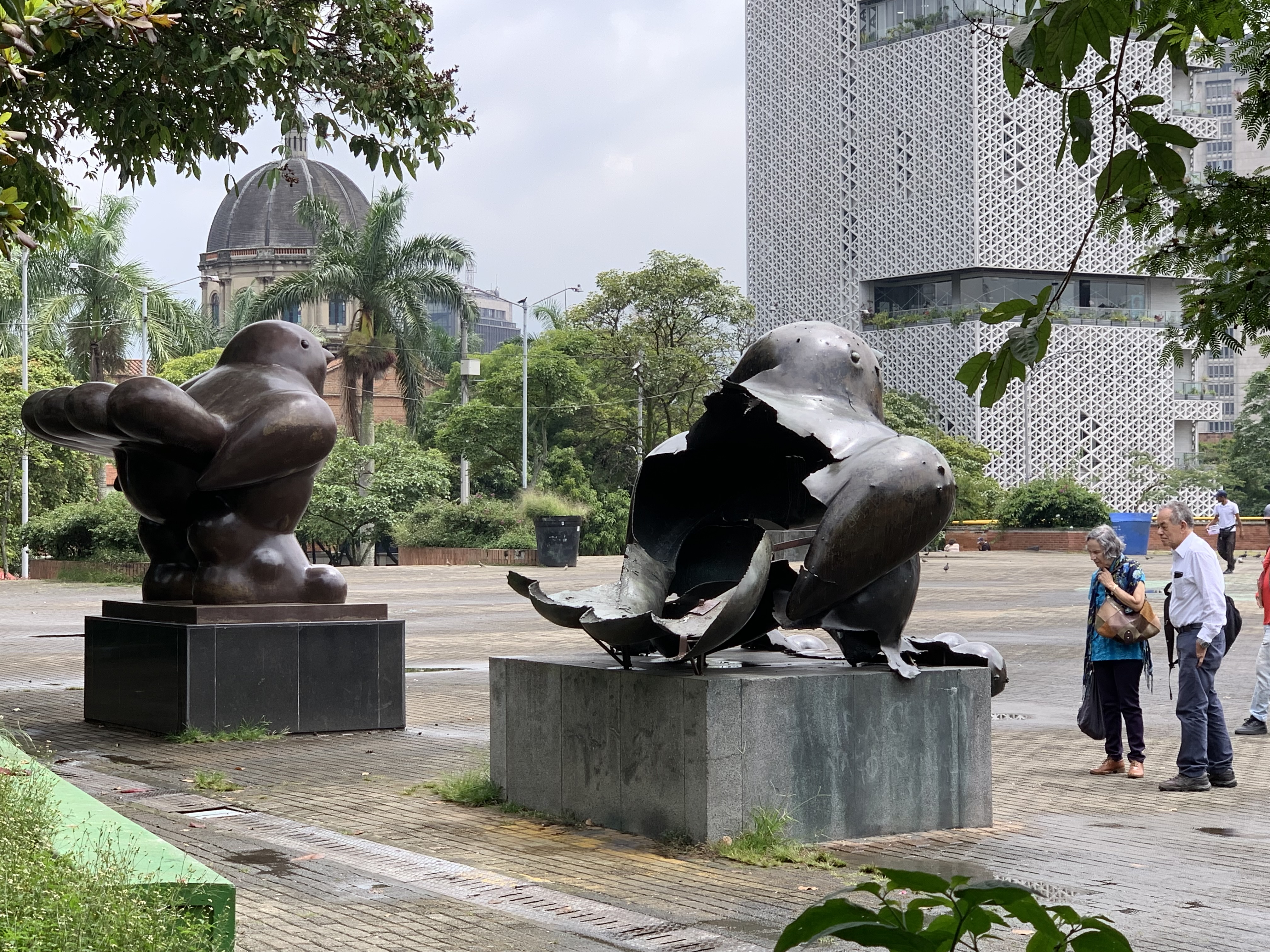
In Medellín and Bogotá, Arline and I attended a wedding, strolled the botanical gardens, drank great coffee, and enjoyed the enthusiasm of Colombian fans as they rooted for their team in the Copa América. We never felt unsafe, but had we walked those streets thirty years before, we might well have been terrified. Fruit of the Drunken Tree by Ingrid Rojas Contreras, who grew up in Bogotá, tells the stories of two girls, one wealthy and one poor, who lived through those times. I read it while we were traveling. By the end of the novel, some characters have experienced such brutality that they will never be the same.
When I was growing up, I got the impression that all the bad things had happened in the past and would never happen again. I don’t know how I absorbed that message while images of the Vietnam War, civil rights movements, Kent State, and Watergate played on television, but somehow I did. So the rise of a truly evil political movement in the United States took me by surprise. The audacity of those involved continues to shock me even as I recognize that bad things never stopped happening and that the seeds of this political movement were planted decades ago. Rojas Contreras’s novel was a reminder that as bad as these bad things can be, at the heart of our lives are the relationships we forge with the people around us. Our own actions, no matter how seemingly insignificant, can hurt others or ease their way.
On the theme of reading while traveling, in July I finished reading Thinning Blood, a memoir by Leah Myers. At a writing conference in Port Angeles in April, a presenter mentioned her book, and I picked it up at Port Book and News. Myers is a member of the Jamestown S’Klallam Tribe, a people with a long history on the Olympic Peninsula. But Myers was raised mostly in Georgia with little contact with the tribal community, and if she has children, they will not be eligible for membership. In the memoir, she grapples with what her racial and ethnic identity means to her and to the people around her.
Recently, a presidential candidate questioned his opponent’s identity, and while his racism was overt, it made me think of how often well-meaning white people struggle to understand ethnic, racial, and cultural identity. Part of the problem is that they don’t realize they have such an identity — there are few opportunities to learn about it in school and little discussion in the culture at large — so they can be dismissive of the whole concept of identity, especially when it’s dynamic and complex (which it usually is). I think of our one-year-old great grandson, who is Mexican/Filipino/Panamanian American. When he gets that question, “What are you?” — and he will — he will have to decide how to answer. Or whether to answer. I appreciated Myers’s attempts to figure out her own answer to that question.
As I revised my novel on the Mount St. Helen’s eruption in July, these books reminded me of the solemn obligation we have as writers to tell our stories and histories as truthfully as we can. Edna O’Brien, an Irish writer with whom I was not familiar, died this month, and The Paris Review reprinted an interview with her. I was struck by these words: “Writing is a vocation, like being a nun or a priest…. Whether a novel is autobiographical or not does not matter. What is important is the truth in it and the way that truth is expressed.”


 Allison Green